Establish foot pressure before the descent, keep the setup during the pause, and coordinate the press while the buttocks stay on the bench.
Give foot pressure a useful direction
In his bench guide, Greg Nuckols describes the purpose of leg drive as helping drive the chest back and up toward the bar, rather than simply stomping into the floor with no clear direction. That cue is about coordinating the body against the bench and floor. It is not permission to thrust the upper body or bounce the bar off the chest.
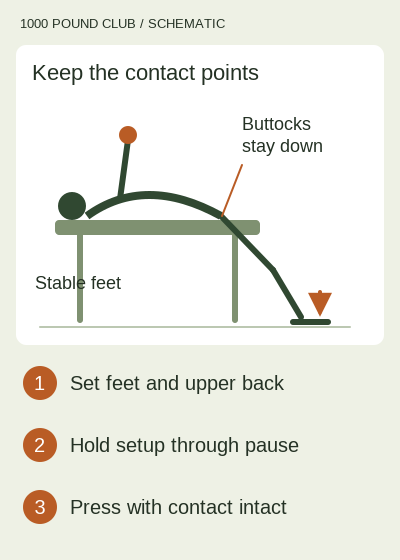
A useful outcome is that the setup remains recognizable as the bar descends, pauses and rises. If foot pressure only appears as a sudden shove after the bar stalls, the timing and direction may be hard to repeat. Practise the coordination before making the load challenging enough to hide what is happening.
Sources: Greg Nuckols: How to Bench Press
Find foot placement you can maintain
Set the feet where they can contact the floor securely and stay there. A position farther back may change the arch and direction of pressure, while another position may make whole-foot contact easier. Nuckols discusses these individual tradeoffs. There is no single toe angle or distance from the bench that every lifter needs to copy.
Start with the equipment you actually use: bench height, shoes and floor grip influence what is practical. If your feet cannot reach securely, use an appropriate setup rather than reaching and sliding during the rep. For an IPF competition, any permitted blocks must meet the federation’s specifications; do not assume every improvised gym arrangement is eligible.
- Choose stable foot contact before the handoff.
- Set the upper back and grip while keeping the intended contact.
- Check that pressure does not slide the feet or lift the buttocks.
- Use a spotter and correctly arranged safeties for practice.
Sources: Greg Nuckols: How to Bench Press; IPF Technical Rulebook, March 2026 v3
Practise the sequence with an easy set
- Set feet, upper back, grip and the chosen bench position before unracking.
- After the handoff, settle at arm’s length and establish steady foot pressure.
- Lower the bar with control while retaining the same body contact.
- Hold the chosen pause without relaxing the setup or sinking the bar for a rebound.
- Coordinate the press with continued pressure through the feet, then finish under control.
This is our practice sequence synthesized from the coaching explanation and the competition contact requirements. It is not a universal demand for maximum pressure at every instant. Begin with a load and rep count that let you notice the sequence, and ask a qualified coach to help if the action is unclear. The point is repeatability, not learning a stronger kick.
Nuckols emphasizes that timing takes practice. Use one cue at a time so you can see whether it helped. Changing foot position, grip width and touch point together makes it difficult to tell what improved the set. Keep the other variables stable during a small practice comparison.
Sources: Greg Nuckols: How to Bench Press
Leg drive still has to preserve legal contact
Under the current IPF rules, the head, shoulders and buttocks remain in contact with the bench. The feet are flat on the floor as far as the shoe shape allows and must remain flat if they move. Lifting the feet is not allowed. Other federations can differ, so check the rules for the meet you plan to enter.
The rulebook also lists heaving or sinking the bar after it becomes motionless, and using upper-body thrust to initiate the press, as failures. A stable leg-drive cue should not become either of those actions. Keep the pause and commands intact; an effective-looking gym press can still fail a competition standard.
Common observations and a concrete next check
| Observation | Check next | Practice response |
|---|---|---|
| Buttocks leave the bench | Direction and size of the push; foot position | Reduce the demand and find pressure that preserves contact |
| Feet slide | Floor grip, footwear and initial placement | Reset securely before another rep |
| Bar rebounds or sinks for a boost | Pause and body movement together | Practise a still pause with a lighter load |
| No repeatable timing | Pressure appears only after the bar stalls | Return to an easy setup → hold → press sequence |
These are coaching review prompts, not diagnoses from a single video frame. A stable side view can help show bench contact and foot movement, but keep filming equipment outside the spotting area. Review the whole rep at normal speed before isolating a frame. Do not use an extreme angle that hides the buttocks and then treat the unseen contact as verified.
If changing the setup causes pain or loss of control, stop that experiment and get appropriate help. The goal is a usable technique for your body and rules, not forcing a particular arch or foot position because a schematic shows it.
Keep one useful note after each practice set
- Feet stayed secure and met the chosen rules.
- Head, shoulders and buttocks kept their required bench contact.
- Pressure was present before the descent and remained coordinated.
- The pause stayed still; the bar was not bounced or heaved.
- One cue and its observed effect were written down.
For example: regular grip, paused bench, same load as last practice; feet stayed still but buttocks lifted on rep three. The next decision is to review the setup and pressure with a manageable load, not count that rep as a rules-standard success. A checklist helps identify a specific observation without inventing a percentage of strength you gained from leg drive.
Keep the load, reps, foot setup and contact notes in the variation log. If the wider issue is stalled bench performance, use the plateau guide to assess the whole training pattern. Leg drive is one skill within that pattern, and technical practice does not substitute for a suitable program, consistent attendance and comparable records.
Sources and scope
These references support the specific factual points cited above. The examples and decision aids are original illustrations, not individualized coaching or medical advice.
- Greg Nuckols: How to Bench Press
Coaching and biomechanics reference checked November 23, 2026. Supports grip and leg-drive discussion; current competition rules come from the IPF, not this older guide.
- IPF Technical Rulebook, March 2026 v3
Current English version on the IPF rules page, checked November 23, 2026. Rules of performance and equipment define competition eligibility; our training examples are separate.
A goal worth keeping track of.
1000 Pound is building a mobile app around your squat, bench, deadlift, and the real singles that make up your total. Coming soon for iOS and Android.
Release news and the current first-year-free offer. No payment details needed.